Our Partners:
All rights reserved.

Determining the dime values at home requires applying standardized procedures for identifying the year of issue, mint mark, and physical condition.
The valuation process excludes using intuitive assumptions, relying on technical alloy specifications and statistical auction sales data.
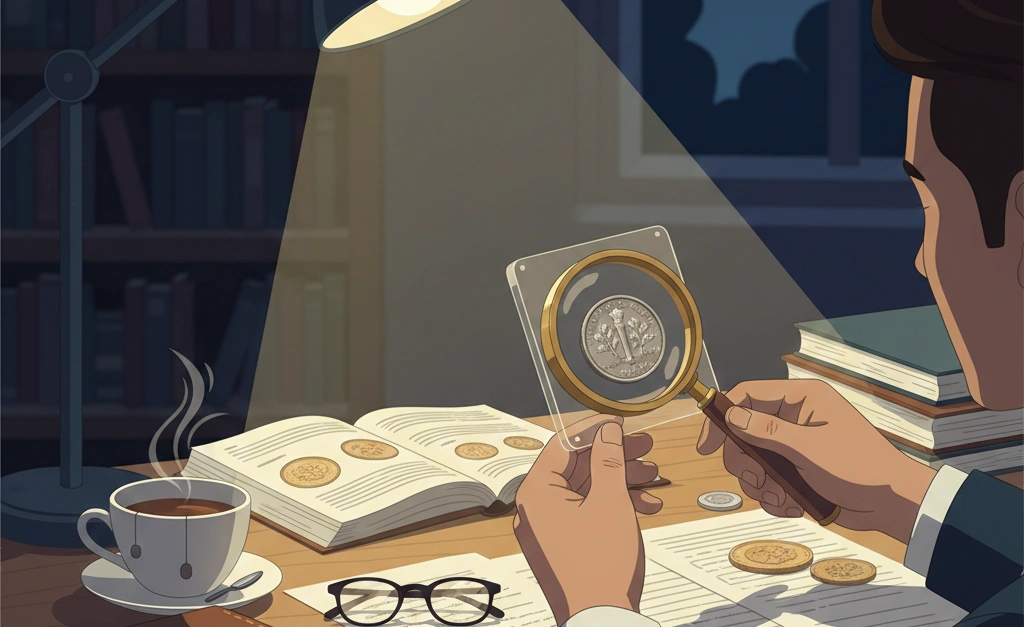
The first stage of home verification involves dividing coins into categories based on precious metal content, depending on the year of issue.
Dimes struck before 1965 consist of 90% silver, providing them with a minimum value tied to exchange-traded metal prices.
Minting Period | Alloy Composition | Standard Weight (g) | Tolerance |
1892–1964 | 90% Silver, 10% Copper | 2.50 | +/- 0.097 |
1965–Present | Cupro-nickel cladding on a copper core | 2.27 | +/- 0.113 |
Weight verification using electronic jewelry scales allows for identifying wear or the use of non-standard planchets.
A silver dime weight decrease of more than 10% from the standard indicates critical wear, moving the coin into the bullion scrap category.
A coin's value is determined by its rarity, recorded in the population reports of the mints.
The mint mark is located on the reverse (to the left of the torch base for Roosevelt dimes until 1964) or on the obverse above the date (after 1968).
Philadelphia (No mark or P): Typically possessing the highest mintage.
Denver (D): The second most common mint, often having specific die defects.
San Francisco (S): Modern issues from this facility are Proof quality collector coins.
Rare Date | Mint Mark | Reason for Value | Record Price (USD) |
1916 | D (Mercury) | Low mintage (264,000 pcs) | $207,000 |
1921 | P/D (Mercury) | Post-war minting slump | $30,000+ |
1949 | S (Roosevelt) | Regional shortage | $10,000 (MS 68) |
1982 | No P (Roosevelt) | Mint mark omission error | $1,000+ |
Determining the price requires correlating the coin's condition with international grading standards.
Using a 10x magnifying glass allows for detecting circulation signs invisible to the naked eye.
Uncirculated (MS 60–70): Absence of wear on the highest relief points (Roosevelt’s cheek, fasces bands on Mercury reverse).
About Uncirculated (AU 50–58): Barely noticeable abrasion of the original lustre on protruding details.
Extremely Fine (EF 40–45): Full detailing of letters and hair despite light overall wear.
Good/Fine (G 4 – F 12): Heavy abrasion, where image contours merge with the coin field.
Statistics show a coin value drop of 45–60% when moving from MS 65 grade to MS 63.
For Mercury and Roosevelt dimes, additional criteria exist, radically increasing the value of specimens in Uncirculated condition.
For the Mercury series, this is Full Bands (FB) — the complete separation of the horizontal bands binding the fasces on the reverse.
For the Roosevelt series, this is Full Torch (FT/FB) — the presence of distinct horizontal lines at the top and bottom of the torch.
Coin Type | Condition | With FB/FT Premium | Without Premium | Difference (%) |
1945-S Mercury | MS 67 | $15,000 | $150 | 9900% |
1954-S Roosevelt | MS 67 | $600 | $30 | 1900% |
The absence of clear line separation due to a weak strike moves the coin into the common issue category.
Coin prices change daily depending on auction demand and precious metal costs.
To obtain current data, using three types of resources is necessary:
PCGS/Coin Value App Price Guides: Basic benchmarks for certified coins.
CoinWorld / Greysheet: Professional reports on dealer prices (Bid/Ask).
Auction Archives (Heritage, Stack's Bowers): Information on actual transaction amounts over the last 12–24 months.
Analyzing completed eBay listings allows for evaluating the liquidity of low and mid-grade coins trading 20–30% below official catalog prices.
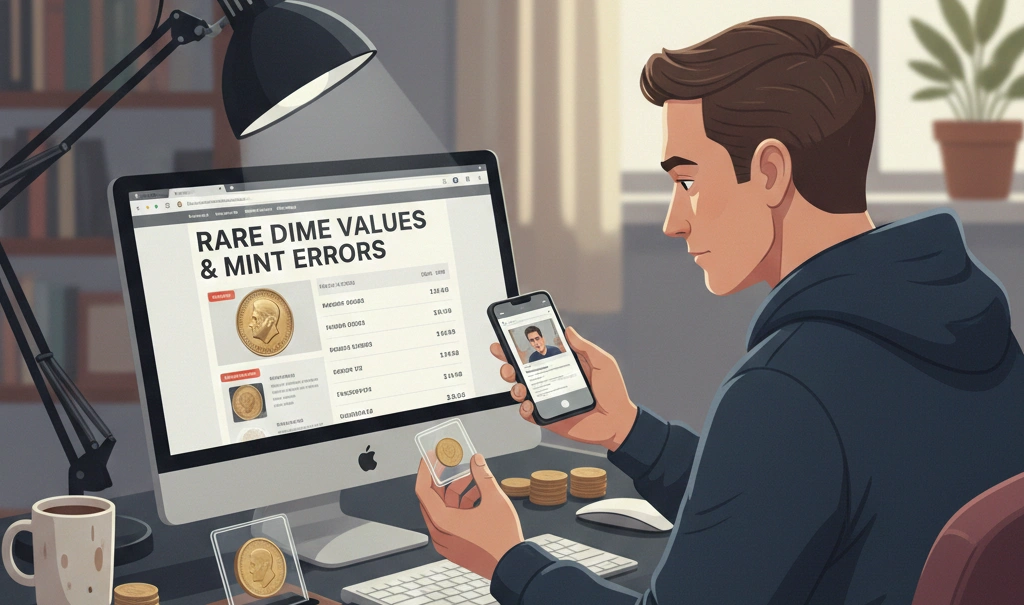
Independent valuation is impossible without excluding factors of mechanical intervention.
Artificially altering the appearance (Cleaning/Polishing) nullifies the numismatic value of a coin, leaving only the metal value.
Parallel Scratches (Whizzing): The result of cleaning with a wire brush to simulate lustre.
Chemical Etching: An unnaturally bright white silver color, lacking the original patina.
Mint Mark Removal/Addition: Inspecting the mint mark area under 40x magnification to find traces of soldering or grinding.
The proportion of coins returned from professional labs with a "Genuine/Details" note (no numerical grade due to damage) is up to 35% for private collection finds.
Long-term dime ownership requires accounting for annual inflation and commission costs upon sale.
The average annual price growth for rare dates in MS 65 grades is 3.8% over the last 15 years.
Parameter | Positive Scenario | Negative Scenario |
Price Growth (Year) | +5.5% | -2.0% |
Sale Commission | 10% (Private) | 25% (Auction) |
Holding Period | 10+ years | < 3 years |
Investing in modern cupro-nickel dimes without confirmed mint errors or top grades (MS 68+) is statistically unprofitable.
To conduct a quality evaluation, forming a set of equipment minimizing the risk of errors is recommended.
Free Coin Identifier App: The industry standard for visual inspection.
Digital Calipers: Checking diameter for potential Broadstrike errors.
Calibrated Scales (0.001 g): Identifying fakes and wear.
Holders (2x2) or Capsules: Protecting the surface from oxidation after inspection.
Independent home checking of dime values is a process of matching the coin's physical characteristics with current market data.
Primary value is concentrated in silver issues before 1965, rare dates, and coins in near-perfect preservation states.
Using objective valuation methods, including weighing and microscopic analysis, allows for avoiding the acceptance of mass-produced specimens as rare numismatic objects.

For lovers of handmade crafts, art, and design, as well as moms who enjoy creating imaginative games with and for their children, the idea of making educational games by hand is both exciting and rewa...

Discover how location-sharing apps are transforming virtual craft fairs into a global marketplace. Join Handmade Treasures to connect with artisans worldwide, enjoy a richer shopping experience, and s...
Discover who is on the $100 dollar bill and explore its rich history, design secrets, and collector’s tips. Learn about Benjamin Franklin’s legacy on bills and coins, rare $100 notes, and how to s...
Our Partners: